
Knowledge is not enough.
We must apply.
Willing is not enough.
We must do.
We help you be better than yesterday.
We focus on leadership, teamwork, communication, situation awareness, decision-making, operating under pressure, learning reviews, HOP, psychological safety and just culture...
Recreation & Technical
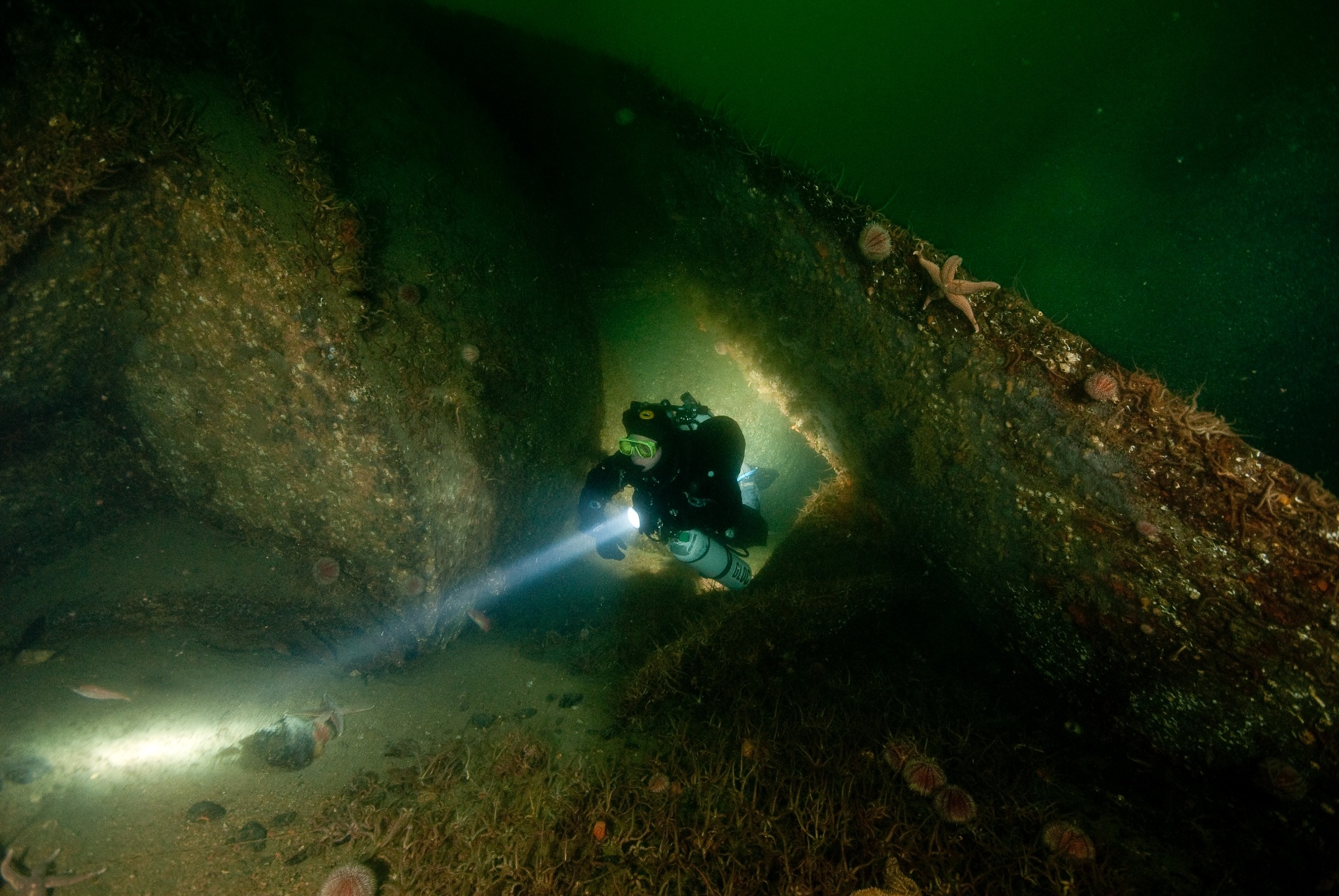
Recreational & Technical Diving
From open water to cave and rebreather, the gaps in your training are rarely technical. Your agency taught you what to do. We cover what happens when a team stops communicating, when a plan loses its flexibility, when no one says what they're thinking. That's where dives go wrong — and that's what we teach.
Commercial & Occupational
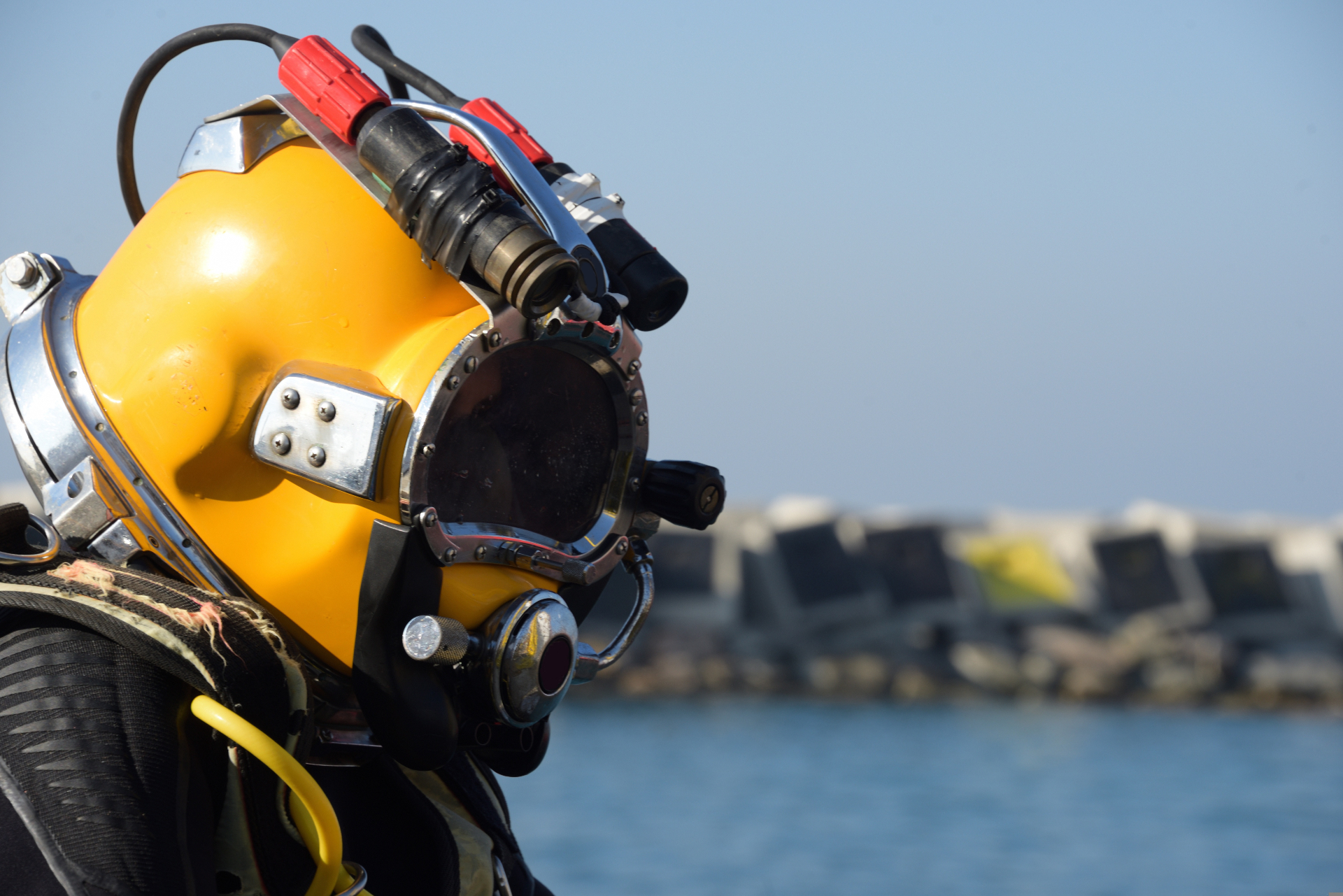
Commercial & Occupational Diving
Commercial diving operates inside management systems, risk registers, and permit-to-work frameworks. Those systems are necessary. They are also not sufficient. The human side — team dynamics, supervisor decisions, stop-work authority, normalisation of deviance/risk — is where your serious incidents will come from. We bridge the gap between your documented procedures and how work actually gets done.
Defence & Special Operations
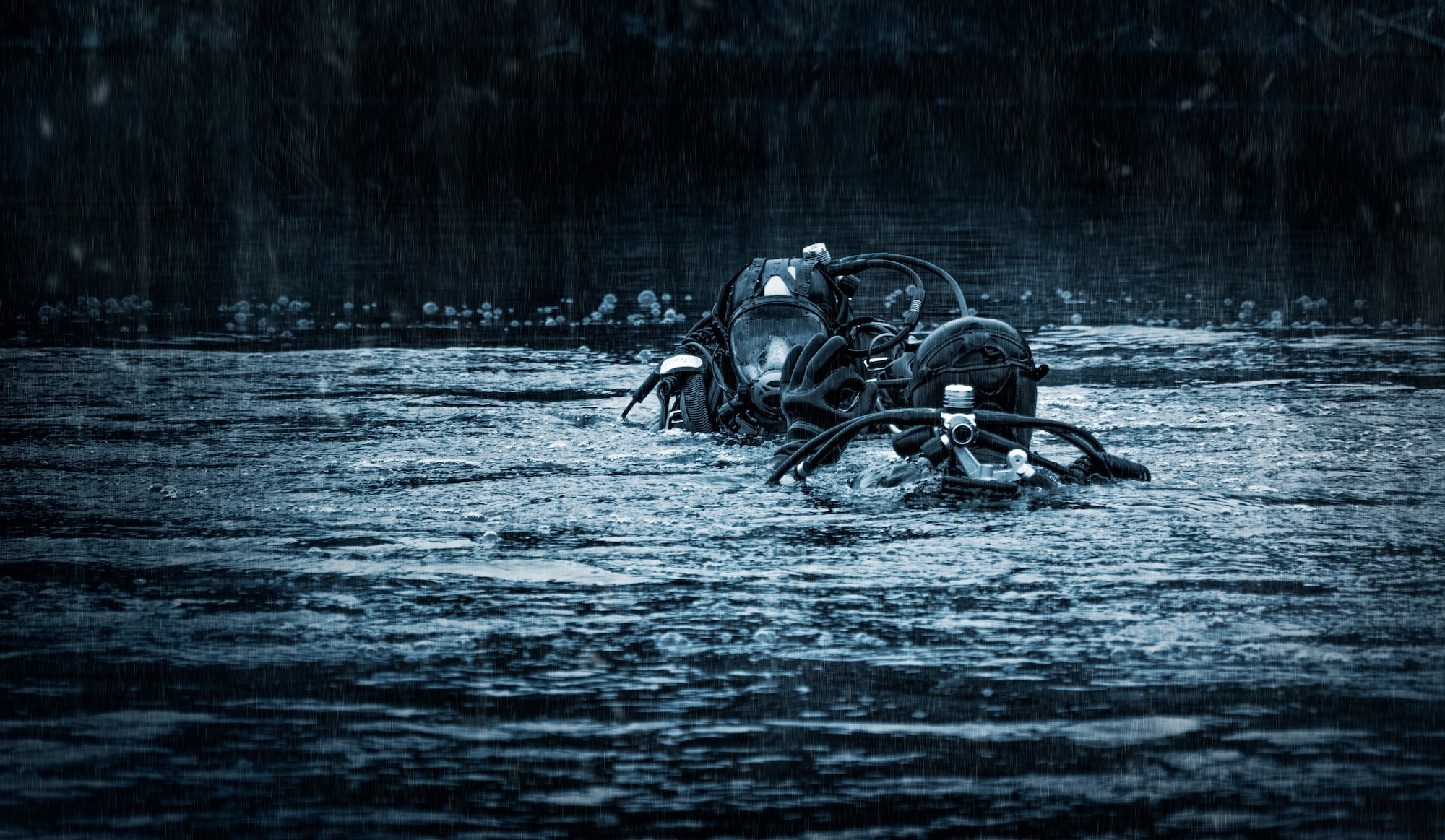
Military Diving
Military diving teams operate at the intersection of technical complexity, operational pressure, and hierarchical culture. Power distance, mission focus, and the reluctance to report near-misses are systemic challenges, not individual weaknesses. Our programmes — drawn from military aviation and adapted for defence diving — address them directly, in the language of people who have served.
Two sides of the performance coin:
- Does your organisation develop leaders and teams to operate in uncertain and complex environments so failure is less likely?
- Do your investigations genuinely seek to understand how it made sense for people, up and down the system, to do what they did, and feedback those lessons identified into the system to be lessons learned?
Human in the System exists for the leader who knows their teams can be better than today, and are willing to make an investment based on growth not compliance. We don't do 'box-ticking' development.
We also support those leaders who have read enough incident reports to know that 'human error' is a label, not an explanation, and who want to create a learning culture that tangibly improves their operational capacity and performance.
Built from Operational Experience
Gareth Lock, the 'human diver guy' is not a safety theorist who consults on diving and other industries. He is a technical and rebreather diver with approximately 800 dives, a fatal accident investigator for two national defence forces, and a former senior RAF officer and a tactical flight instructor. The frameworks are built from inside the environments they describe.
Grounded in Evidence
Two postgraduate degrees (Human Factors and System Safety at Lund, Sweden; Aerospace Systems at Kingston, UK), a completed MSc thesis on storytelling and learning, and fifteen years of applied research in incident analysis and non-technical skills. Academic rigour without academic distance - a pracademic.
Designed for Transfer
Every programme is built around the principle that knowledge that stays in the training room is not knowledge — it is attendance. The High-Velocity Learning LAB methodology creates the conditions in which participants discover the answers rather than receive them. That distinction is where behaviour change happens.
Where do you want to start?
Self
Coaching and individual development for leaders who want to think differently about how they make decisions, lead teams, and respond to unwanted outcomes.
Teams
Workshops and experiential programmes for teams who need to perform under uncertainty, communicate across distributed knowledge, and debrief honestly.
Organisations
Investigations, speaking, systemic interventions and long-programme engagements for organisations ready to examine how work actually happens — not how it was imagined.
Organisations that keep investigating incidents the same way will keep reaching the same conclusions. The systemic conditions that produced the last unwanted event will remain in place.
Operators who build excellent technical skills without building non-technical skills are preparing for the task they expect — not the one that tests them.
The question is not whether this work has value. The question is what it costs to keep operating without it. Find out what that financial value is...
Placeholder quotes — replace before launch
"After the workshop, I stopped writing 'complacency' in my investigation reports. I started asking what made the action make sense at the time. That single shift changed the quality of every debrief we run."
[Name], [Operations Manager], [Commercial Diving]
"This is the most useful training I have attended in twenty years of diving operations. Nothing else comes close."
[Name], [Diving Supervisor], [Offshore Energy]
"Gareth's work gave our safety team a language for the things we already knew but could not articulate to leadership."
[Name], [HSEQ Director], [Marine Construction]
"We brought this programme to forty instructors across three countries. The effect on incident reporting quality was measurable within six months."
[Name], [Training Director], [Technical Diving Agency]
Placeholder — replace before launch
"The programme fundamentally changed how I approach incident investigation. I used to look for the person who made the error. Now I look for the conditions that made the error predictable. Three of my team have since completed the course, and the quality of our safety reporting has improved beyond anything I could have mandated through policy alone. This is not training as I understood it — it is a shift in how you see the system."
[Name], [Technical Diving Instructor / Commercial Diving Supervisor / HSEQ Leader], [Organisation or Country]
The body of work behind this is substantial. Podcasts, articles in InDepth Magazine, the Human Factors in Diving course series, and the book Under Pressure. All of it builds toward the same question: how do we get better at understanding why things go wrong?
Human in the System
Be Better Than Yesterday
Human in the System
Be Better Than Yesterday
© 2026 The Human Diver
ONLINE
The next LEARNING FROM UNINTENDED OUTCOMES online course will be running in May 2023, dates TBC but will run 17:00 GMT each day. Each online session will last 3.5 hours and finish at 20:30 GMT.
Time converter at worldtimebuddy.com
Next Class Dates/Times
The next 10-week webinar-based classes will start on 15 February 2022 starting 19:30 AEDT (time zone converter below). This is based around Australia/Far East attendees and taught by Mike Mason.
15 Feb - Introduction to HF, Non-Technical Skills and Human Error in Diving and Case Study introduction.
22 Feb - Psychological Safety and Just Culture
1 Mar - Situational Awareness
8 Mar - Decision Making
15 Mar - Communications
22 Mar - Leadership & Followership in Diving
29 Mar - Teamwork
5 Apr - Performance Shaping Factors (Stress & Fatigue)
12 Apr - Incident Reporting & Checklists
19 Apr - Goals and Accountability
Time converter at worldtimebuddy.com
ONLINE
The next LEARNING FROM UNINTENDED OUTCOMES Online course will run from 13:00-17:00 British Summer Time (BST) on 3, 10, 20, 22 and 25 September 2023.
Time converter at worldtimebuddy.com
WHAT YOU'LL GET FROM THE COURSE...

Face-to-Face Interaction/
Live Interactive Webinars
This course is available in two forms. Both involve some pre-learning to ensure the core theory is understood before the interactive sessions occur.
The two-day face-to-face workshop provides practical exercises, case studies and developing an understanding of how an event occurred by examining local rationality and using relationship-based models to help create understanding.
The 5 x 3.5 hr webinar session content is the same as the workshop but arranged over 5 sessions which allow the learning to be consolidated and not get Zoom-frazzled.
Applied Learning
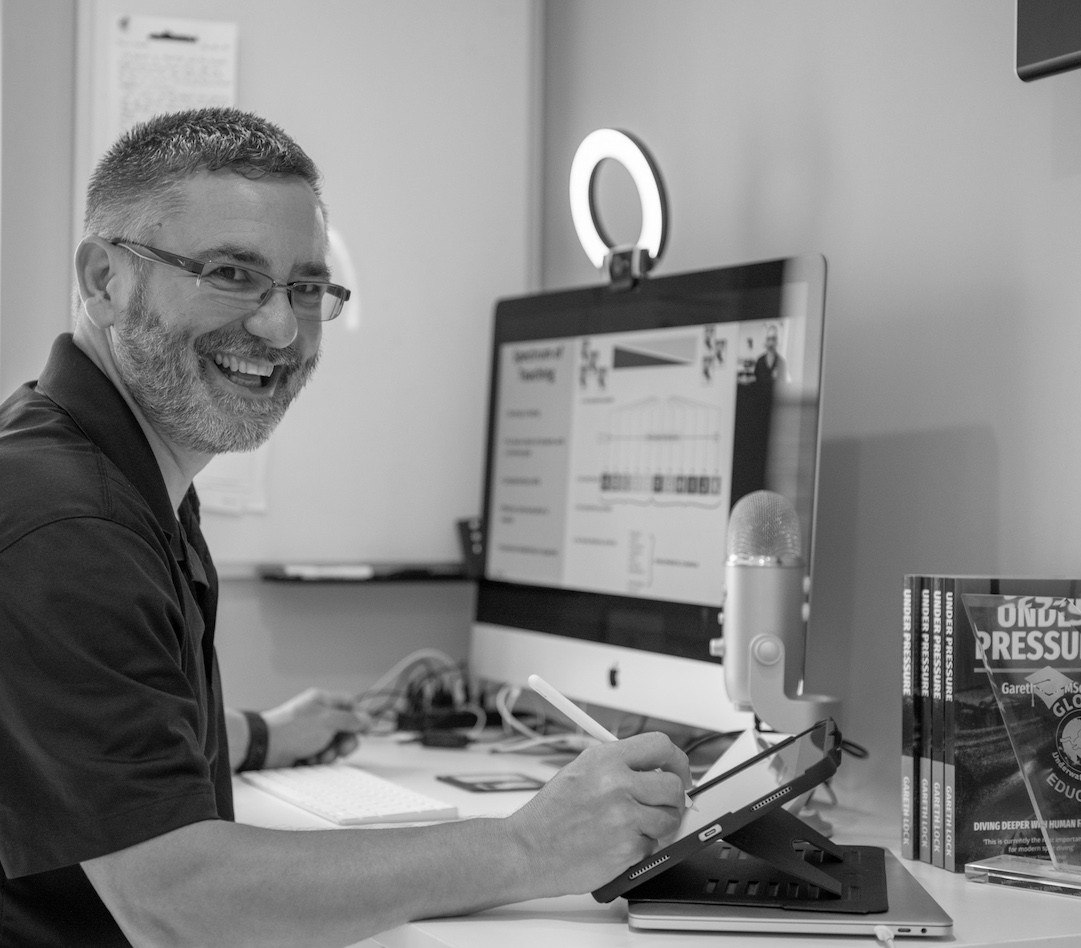
Both workshops will give you plenty of practical skills and knowledge to develop an understanding of how an adverse event could have developed.
It is not about root causes (they don't exist!) but rather the emergence of factors and the presence of error-producing conditions, and how they interact.
You will be given the basic skills to make sense of an adverse event using a learning perspective, not a blaming one, working to understand what 'normal' looks like.
You won't be given a silver bullet to solve problems, but you will be given insight into how to understand local rationality to help prevent future adverse events.

Consolidated Learning
There is no way you can learn and remember everything during these two days or 5 x 3.5 hrs sessions. Therefore, each of the online sessions will be recorded and made available to the course participants. (Private information will be removed from the recordings).
After the class, there will also be regular emails every two weeks out to three months reminding you of some of the aspects of the class.
Course materials and reference papers will be made available in the back end of The Human Diver website.
BONUSES
As a student of this class, you will be given access to additional materials like presentations and briefing notes only available to those who complete a face-to-face class with The Human Diver. The goal being to grown your knowledge, develop your skills and help you take action.
YOUR TUTOR
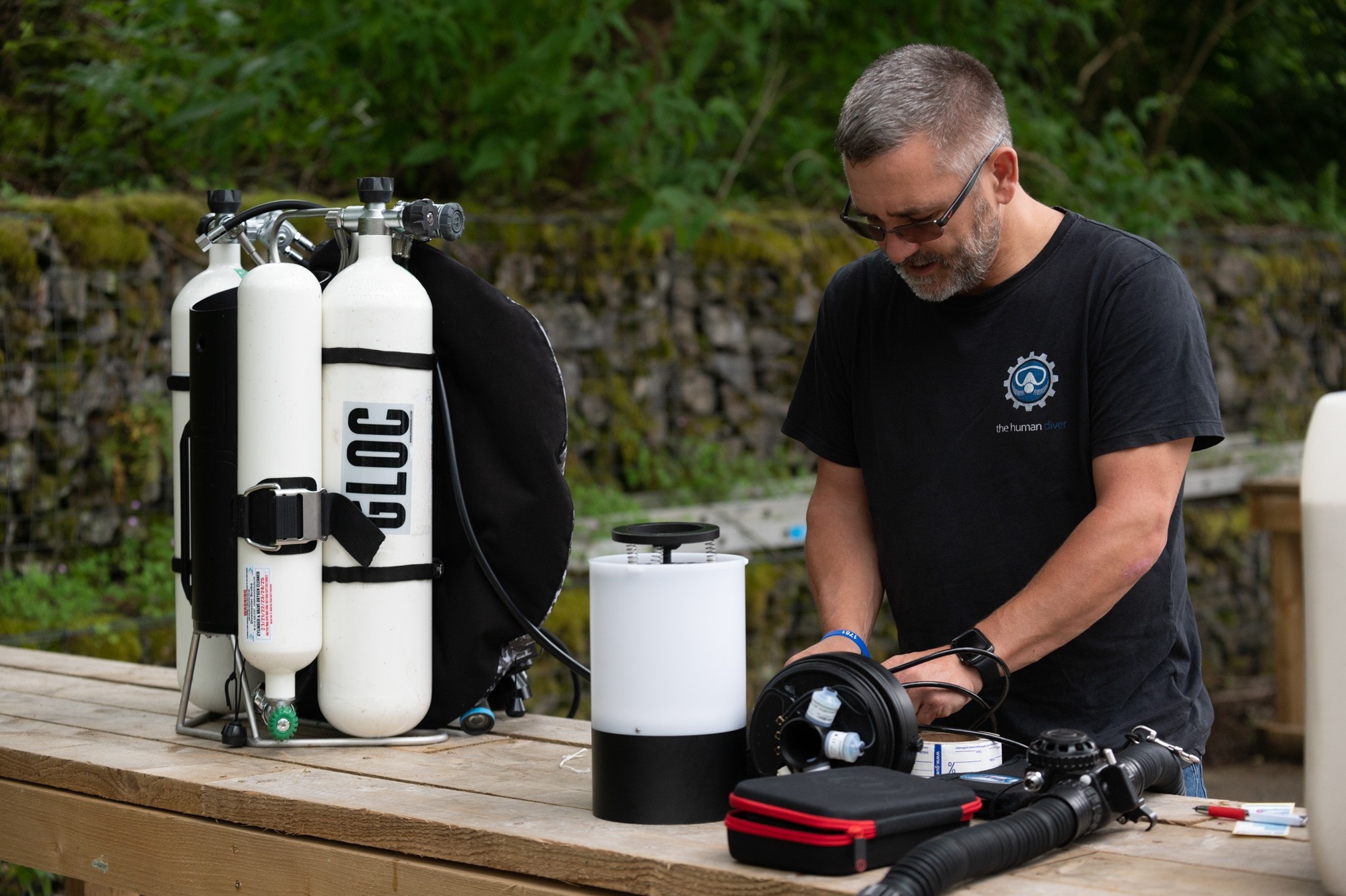
GARETH LOCK, MSC, MCIEHF
Gareth founded The Human Diver in January 2016 when he recognised that there was a gap in knowledge within the diving community when it came to human factors, non-technical skills and the need for a Just Culture. You can see a detailed background here
He has led two reviews into military diving fatalities, one for UK MOD and one overseas with a close military ally, along with examining numerous case studies to help understand the key question 'how did it make sense'. In the global safety domain, he is recognised as someone at the leading edge of ideas of how to improve operational safety by understanding 'Work as Done' as it compares to 'Work as Imagined'.
He is currently undertaking an MSc in HF and System Safety at Lund University looking at 'Second Stories' and whether they contribute to learning.
MIKE MASON
Mike spent 20 years in the Royal Air Force, most of it flying on frontline squadrons. He now works as a flying instructor in the Royal Australian Air Force teaching young pilots to fly fighters. As well as being an accomplished instructor, he is an experienced flying supervisor and holder of a commercial pilot’s licence.
He has been an active diver since 2015 and has around 300 dives in his logbook from as far north as Iceland and as far south as New Zealand. He works part-time as a Dive Master and is also an active CCR diver. Wrecks interest him the most but he gets just as much satisfaction taking groups to see Grey Nurse Sharks at his local dive sites.
Due to his career in military aviation, Mike has lived and breathed Human Factors for his entire professional life. As he became involved with diving expeditions and supervision, he realised how much the diving world could learn from aviation. He is a great believer in Human Factors and how an awareness of them can make time spent underwater safer and more rewarding.
WHAT OUR STUDENTS HAVE TO SAY

"This class has been a game changer for myself as it has given me the HF tools and knowledge as to how I plan to understand, interact and communicate with my dive community, dive team, work, family and even strangers."
Josh Maxwell
"In my case, It's made me dive again. I ended up very disappointed professionally with this industry, certain aspects and certain people. So much so that I even lost the desire to go in the water.
This last month, I have already done seventeen dives. I have also been motivated and encouraged by the fact that there are many people (in this case my fellow seminarians) who want a breath of fresh air in this world and to improve and change certain aspects."
Jamie Sanchez
FAQ'S
WHAT ARE THE OUTCOMES FROM THE COURSE?
- Outcome 1. Oversee and manage the investigation process in line with your organisation’s or team’s guidelines regarding the severity of the event.
- Outcome 2. Lead an investigation, proactively identify latent conditions, organisational weaknesses and develop smart corrective actions.
- Outcome 3. Create an environment where people can identify error likely situations and potential incidents and are free to speak up without retribution.
- Outcome 4. Lead and influence the change needed to create learning within the team or organisation to support outcomes 1-3.
WHAT IS THE INVESTMENT?
It is just £400 (approx $500) - you have lifetime access to these materials as well as the alumni community.
WHAT DO I NEED TO COMPLETE THE CLASS?
The only thing you need is a web browser (PC or Mac) and an internet connection. As there will be interaction using web browsers and Zoom, using a mobile device on its own won't work for the interactive elements.
There are no prerequisites in terms of diving certification. Level 0: Essentials of Human Factors in Diving, is required for both the Level 3.0 online and 3.1 & 3.2 face-to-face courses.
HOW LONG WILL IT TAKE TO COMPLETE?
The course takes place over 16 hours of direct student contact and 4 hours of pre-learning and mid-course learning/consolidation via online self-study. Direct contact is either 2 x full days in a physical classroom, or 5 x 3.5-hour sessions (which includes breaks).
DO I GET A CERTIFICATE OR C-CARD?
You do get a certificate from The Human Diver which you can use for continuing professional development as long as you complete each of the homework assignments.
The course is not currently underwritten by any of the diver training agencies so you won't get a bit of plastic. Sorry! However, we are trying to do our bit regarding single use plastic.
ARE SESSIONS RECORDED?
Yes, all of the sessions are recorded which means you can refer back to them or if you are busy and can't make a session, then you can catch up later, via your laptop/desktop or via the mobile app available for iOS and Android.
HOW LONG DO I GET ACCESS?
You have lifetime access, and you’ll receive an update when we update course reference materials.


"Someone once asked me what the difference between Knowledge and wisdom is; Knowledge is gained from one's own experience, Wisdom is obtained from others experience. I feel that this class truly embodies this quote."
Jacqueline Patek
OW Diver and OR Nurse
AWARD WINNING PROGRAMME
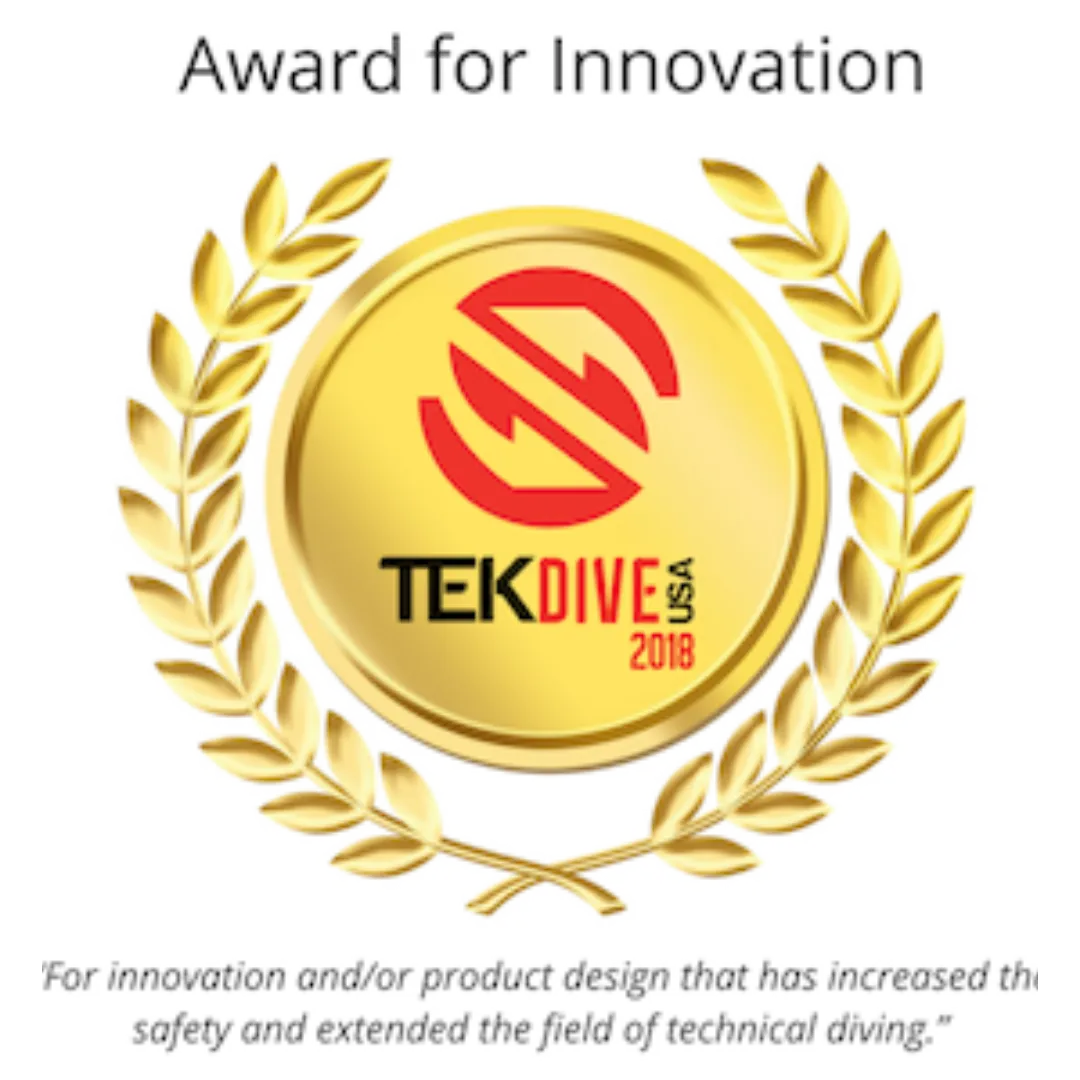
We were so delighted that the Online Micro Class was awarded The Innovation Award at the 2018 TekDiveUSA Technical Diving Conference.
“For innovation and/or product design that has increased the safety and extended the field of technical diving.”

100% MONEY BACK GUARANTEE
We are so confident that you’ll benefit from this 10-Week Webinar Programme that if you’re not 100% happy with it we’ll refund your money. All we ask is that you provide some robust feedback within a month of completing the programme as to why the learning didn't happen and how we can make the class better. What do you have to lose?