IS YOUR CLASSROOM EXPERIENCE TWO-DIMENSIONAL?
Imagine being in a learning environment where you face 85-100% of the same challenges you face in the real world. Where there are real and perceived time pressures, where information is ambiguous, where goal conflicts are encountered, where unvalidated assumptions are used for critical decisions, and where the lack of effective communication means the knowledge distributed across the team, like pieces in a jigsaw, is not shared on time. All in real-time.
But this is different. There is no professional jeopardy. You are in a psychologically-safe environment, and so you can learn from success and failure using a structured DEBrIEF process along with 'black box data' from the simulator to facilitate your learning.
And best of all? It's fun.
This is the High-Velocity Learning LAB

HELPING YOU AND YOUR TEAM EXPLORE, DISCOVER AND LEARN
So, we asked Frank another question. As we do. We asked him, if the exact same thing happened at the airport while he was on his way to a three-week holiday with his family, would he do it differently? After pondering on this for a moment, he replied, “Yes, that would probably be a bit more of a problem.”
Are you the sort of person that could relate to this scenario because you haven’t had a major outcome?
The moral of the story? Just like with Frank, Human in the System takes you on a journey of guided discovery.
We focus on the learning process and development, rather than the outcome.

EXPLORE
Exploration is about going into the unknown. No one can bring any prior knowledge about how to operate this prototype spacecraft. To succeed, those taking part must find the non-technical skills to communicate and operate effectively as a team. They will explore their emotional and psychological boundaries. Both, as a team, and individually.
As one graduate commented
"The course is very introspective - be prepared to feel utterly unravelled but unconditionally supported at the same time!"
We push you. But not too far. Our experienced trainers can spot the clues, and back off if need be. They will also dig deep, sometimes uncomfortably so, in the DEBrIEFS. There is no 'spoon feeding' of answers here.

DISCOVER
Those who take part in a High-Velocity Learning LAB (using the Interpersonal Skills LAB) find they can move from a group of people who know each other, to a team who trust each other. They find out things about themselves and others that they didn't know (or didn't want to know). Guided discovery is a very powerful tool because the answers are found within those taking part - we don't give the team the answers, they find them. The environment is psychologically safe - everyone is equally technically incompetent!
As one senior executive found out:
"Is this how I lead in the real world?
"Yes"
"Oh..."
It's not something you'd easily discover in the real world.

LEARN
Learning is about a change in behaviour following a discovery or exposure to new information. All of the High Velocity Learning LAB sessions involve deep learning-focused DEBrIEFs which not only identify what went well and why, and what will be improved and how, but also individual and group reflection exercises to identify aspects of change going forward.
Furthermore, to ensure the learning is 'sticky', follow-up coaching sessions are scheduled, either online or via coaching emails, with key behavioural changes identified.
This external accountability has been shown to be effective in keeping the ideas, tools, and actions at the forefront of the participants' minds after the <<LAB>> missions have finished, thereby improving learning and change.

Transformative Learning
Experiences
The most effective leaders are those who are introspective and want to learn and develop. If you are honest with yourself, and want to look in the mirror to find answers, Interpersonal Skills LAB provides an incredibly powerful experience to identify traits and behaviours to reinforce, along with opportunities for improvement: we provide tools to help you with this.
Think of an <<LAB>> session a bit like a cross between training, coaching, and mentoring. All wrapped up in a novel real-time, high-stress, highly immersive simulator!

Non-Technical Skills for Uncertainty Management
The High-Velocity Learning LAB learning environment will expose you to real-world challenges in real-time.
- Communication under stress
- Leadership behaviour
- Just culture & psychological safety
- Situation awareness
- Decision-making under uncertainty
- Workload & stress management
- Time- & resource management
To be successful, you've got to use non-technical skills to create a shared mental model in the team.
Enhanced Team Dynamics and Leadership in Complex Environments
The modern business world is dynamic, full of uncertainties and complexities, where teams can form and disband quickly, and operations take place remotely and asynchronously.
High-Velocity Learning LAB is not linear in its progression - events and problems emerge and decisions earlier in the mission can have major consequences later on! Systems fail and task priorities change. The simulation can be run remotely in different rooms or via an online setup using Zoom.

Learning from Unintended or Unexpected Outcomes
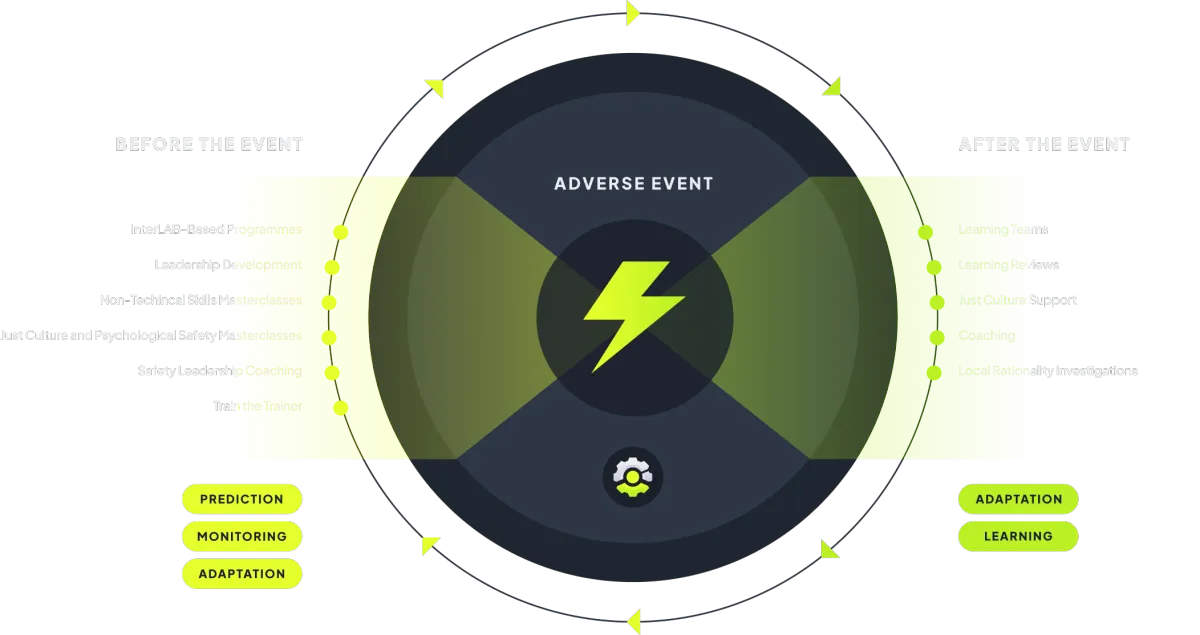
Develop the knowledge and skills to understand how it makes sense for people to do what they did - what was their local rationality? Learning Teams. Learning Reviews.

Coaching and Mentoring - Making the Learning 'Sticky'
Training and practice only get you so far. Many need external accountability to dig deep.



Teresa Sacchetta. Anaesthetist
"The course helped me to give the real value for the human factor and non-technical skills. And to understand the huge impact they have in preventing accidents, as well as to manage them to reduce risks. Everyone who wants to achieve better results and to be a better leader should do the course."

Olly A. Safety Governance Specialist
"As a safety governance specialist for military hazardous maritime activities, the course reinforced my beliefs in the value of a human performance orientated approach to safety, where greater emphasis on the person is key to making further gains. There is a balance to be struck however, to ensure we sharpen up how safety is done without over-promising on 'a new way' of protecting people from harm. Fundamental in all this is the need to understand how to get the best from yourself and others. The Interpersonal Skills LAB gives you the tools to better understand the why and how behind the human factors that directly impact outcomes; it is a hugely valuable training package applicable to anyone who is engaged in risk-to-life activities."

Chris Boike.
Safety Manager
"Incredible course - best leadership training I have been able to participate in to date!
Lots of tools to influence and improve outcomes were given in this training, some simple but useful (such as the notetaking system for used for the simulation observers, the DEBrIEF model), and some diving much deeper into how and why a certain sequence of events are likely to develop if humans are involved. The simulations are intense, compacting weeks or months of team interactions into a compressed time and giving Gareth plenty of teachable moments. Highly recommend this course for anyone interested in contributing to better outcomes!"

Leadership and Team Development Programmes
Leadership and teamwork don't just happen, especially if you subscribe to a compliance-focused 'sheep-dip' approach. We embrace the principles of Human Performance (ICAO)/Human and Organisational Performance (HOP)

Learning Teams & Local Rationality Investigations
Traditional root cause analyses tend to focus on simple tools like 5 Whys or Fishbone diagrams. Complexity needs different tools.
Just Culture and Psychological Safety Masterclasses
"Why do we need a whole day to talk about Just Culture?"
....
"Oh, that's why...it's messy and complex..."

Bespoke Workshops
While there are 'standard' programmes that we can call upon, the most effective way of creating learning and change in your team or organisation is by understanding your needs.

Coaching and Mentoring
We firmly believe in the 10-20-70 rule when it comes to knowledge acquisition and skill development. Learning. Not training.

Train the Trainer
Human in the System is a strong believer in sharing and distributing our knowledge to others so that they too can make positive changes in the world.
HOW DOES IT WORK?
Face-to-Face or Remote Operations
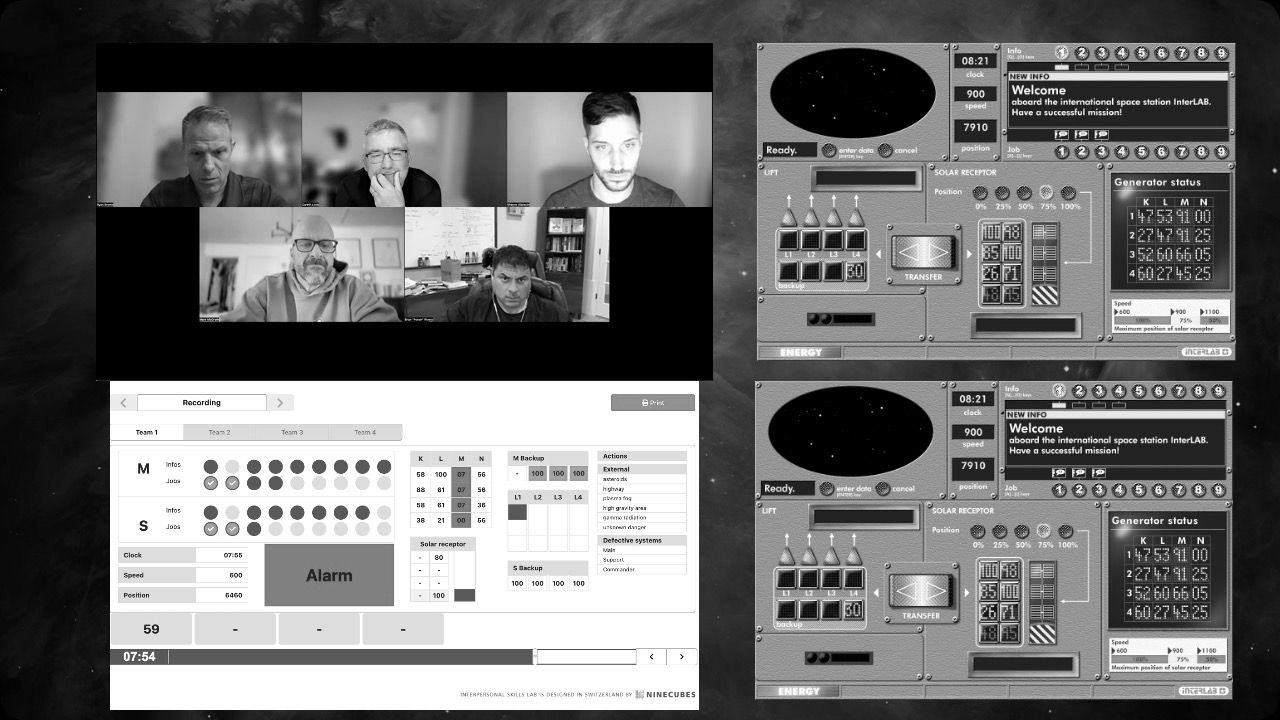
The Interpersonal Skills LAB can run in a classroom setting, using an open Wifi internet connection to the hosting servers. It can also be run in remote locations using a standalone secure server. This is ideal for those places where internet connectivity cannot be guaranteed or firewalls prevent easy access to the internet.

The programmes can also be run where the participants are remote but on the same site using radios or intercom as the medium for communication, or they can run via a Zoom meeting where participants are physically dislocated.
Team Composition / Numbers of Participants
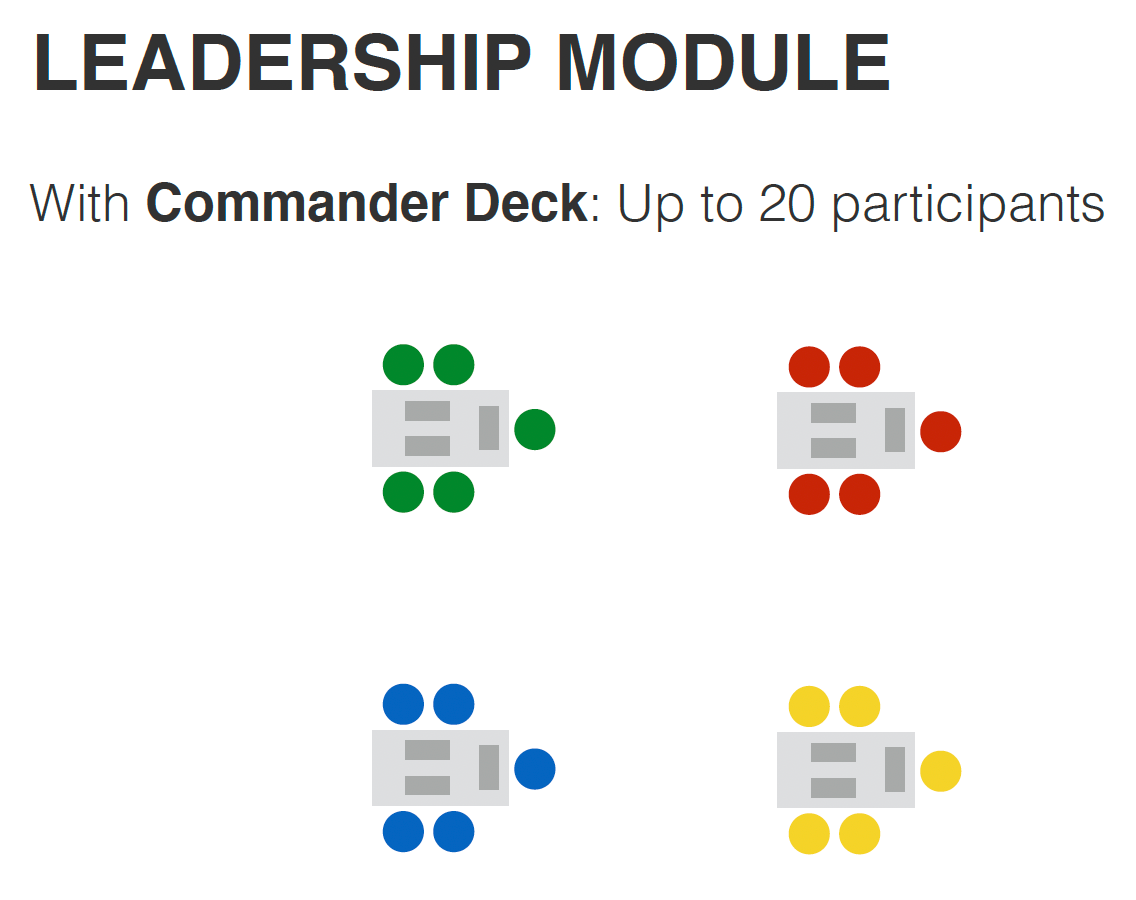
The standard Interpersonal Skills LAB missions (Venus, Mars, Saturn, and Uranus) are scalable from two participants operating, one on the main deck, and one on the support deck, all the way to 20 people consisting of one mission commander, and two on the main deck and two on the support deck for each team, and four teams taking part. We have found that introducing observers that rotate between an operational role and an observer role, provides additional learning.
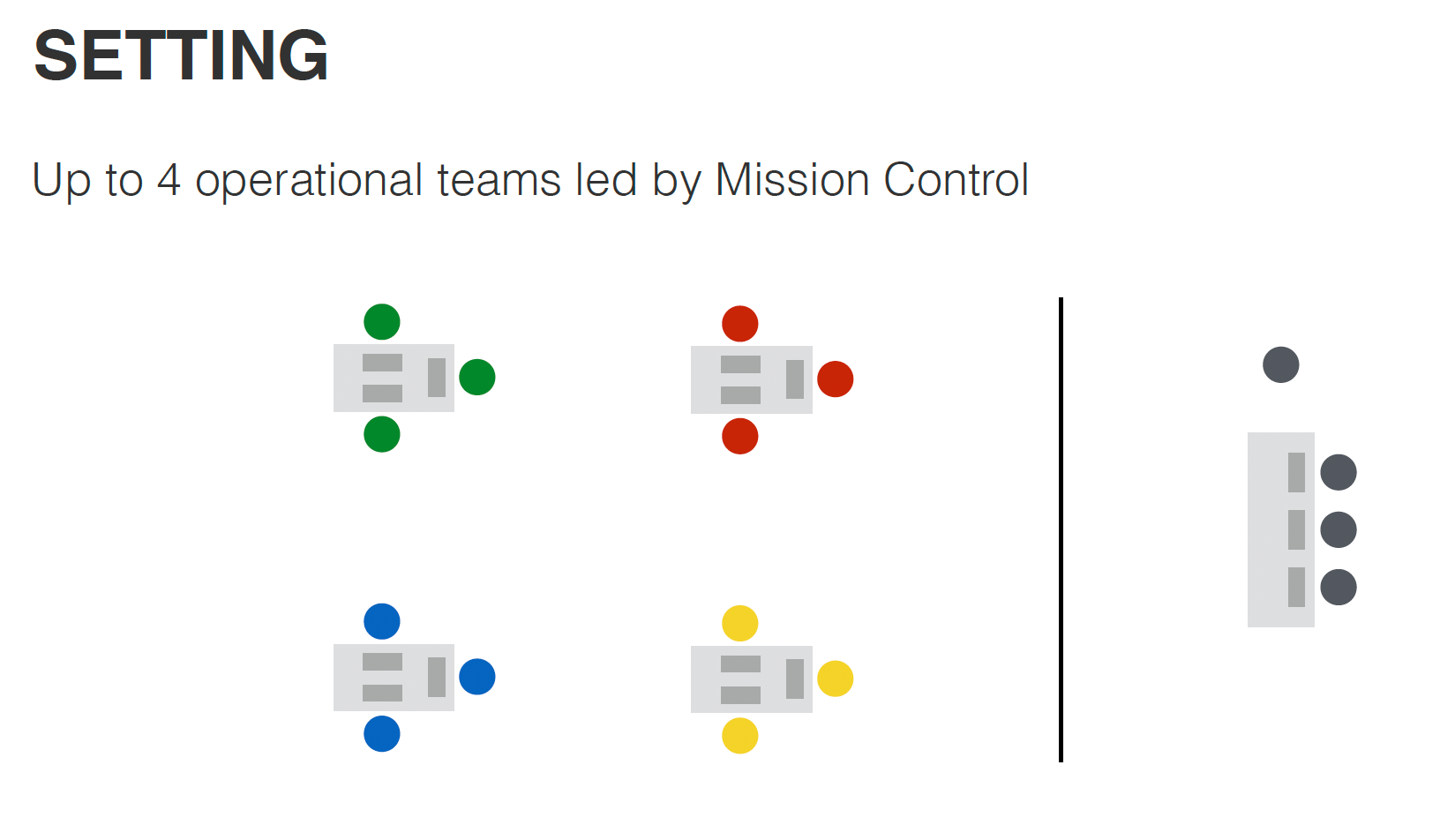
The Discovery of Nexus module allows a different set of learning to take place, one that is focused on collaborative work rather than competitive work.
Discover of Nexus allows 23 people to operate as one team, where three sit in Mission Contol, and there are four mission teams of five people (e commander, and four mission crew).
Feedback and Performance Measurement Tools
We make use of three main sources of information to provide feedback to the teams involved in an Interpersonal Skills LAB session.
- Observations of the teams' behaviours, actions, and conversations during the live missions.
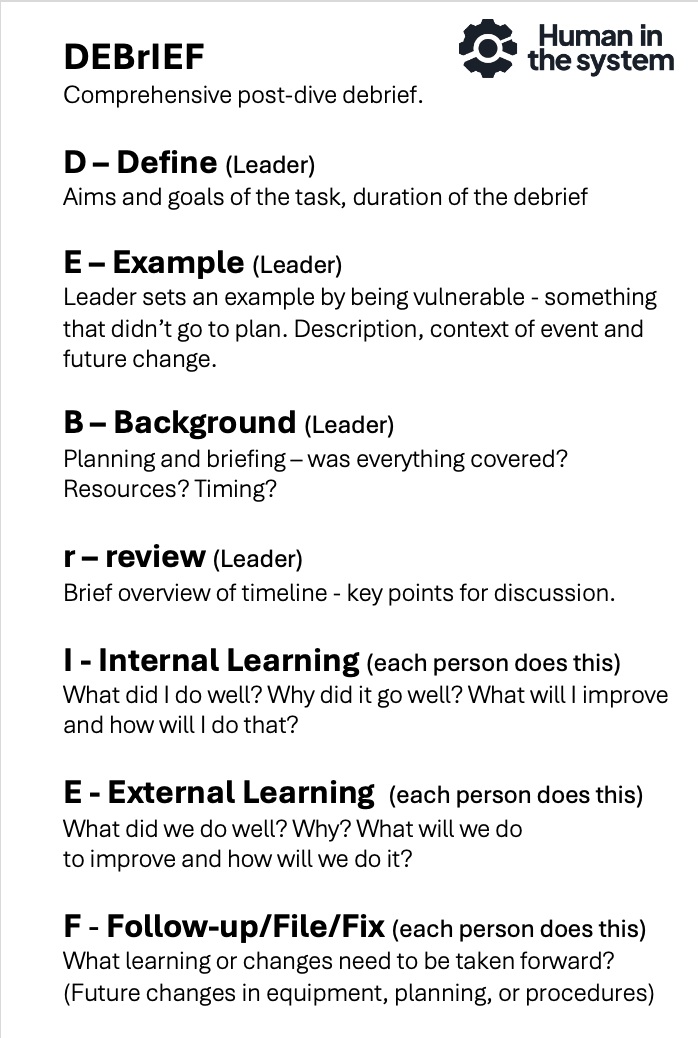
- The DEBrIEF process that reflects on both the positive aspects and areas for improvement, based on their perceptions of the events as they happened.
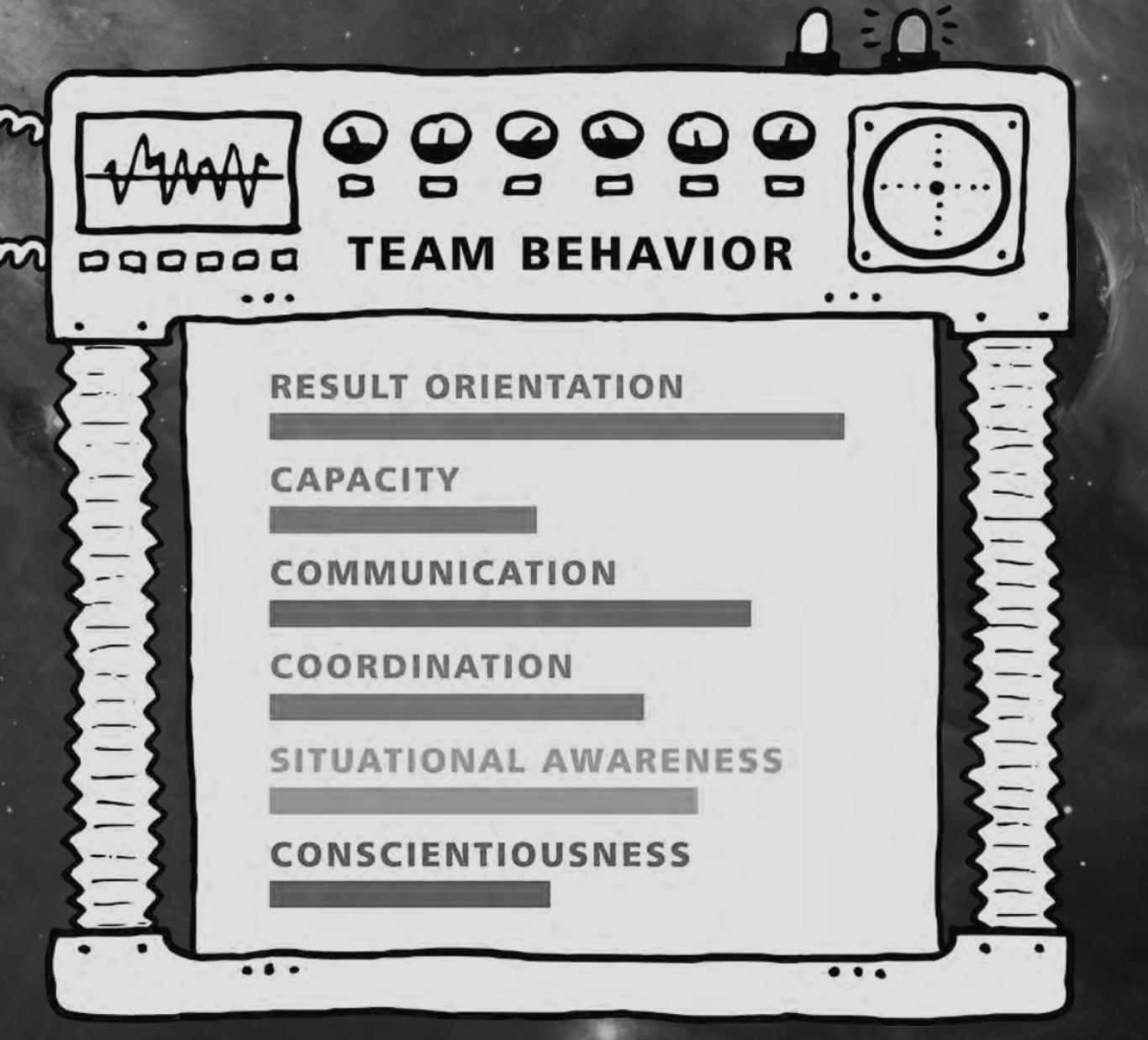
- The 'black box data' that the <<LAB>> provides is used to measure proxies associated with results-orientated behaviour, team cognitive capacity, communication, collaboration, and attention to detail.
Over a series of missions, a test-intervention-retest process can be applied, showing that the intervention and feedback are the primary sources of improvement within the team.
Lasting Change Post-class (Learning!)
Learning requires a change to happen. This happens at the individual and team level, and ultimately at the organisational level.
The Interpersonal Skills LAB workshops have two different levels of knowledge/skills transfer. The first is at the mission level when the final item in the debrief is for each mission player (and observer) to answer "What did they learn from this mission to apply to their own operations?"

The other transfer exercise is done at the team level where a discussion exercise takes place between the team members without the facilitators present, and actions are determined going forward, bringing all the lessons identified in the missions to the fore.
These nearly always include the need for more effective pre-task briefs and post-task/project DEBrIEFs.
Discovery of Nexus - Teamwork at the Strategic Level
Discovery of Nexus (DoN) is an add-on module that provides a different perspective.
In a normal <<LAB>> environment, teams are in competition with each other, but in DoN, the four teams plus Mission Command have to work together to colonise a planet. This means we can train more than up to 24 people in one session covering tactical, operational, and strategic leadership and team activities.
The problems faced in the real world like asynchronous communication, incomplete information, competing goals, layered decision-making and time pressures are all encountered in real time.
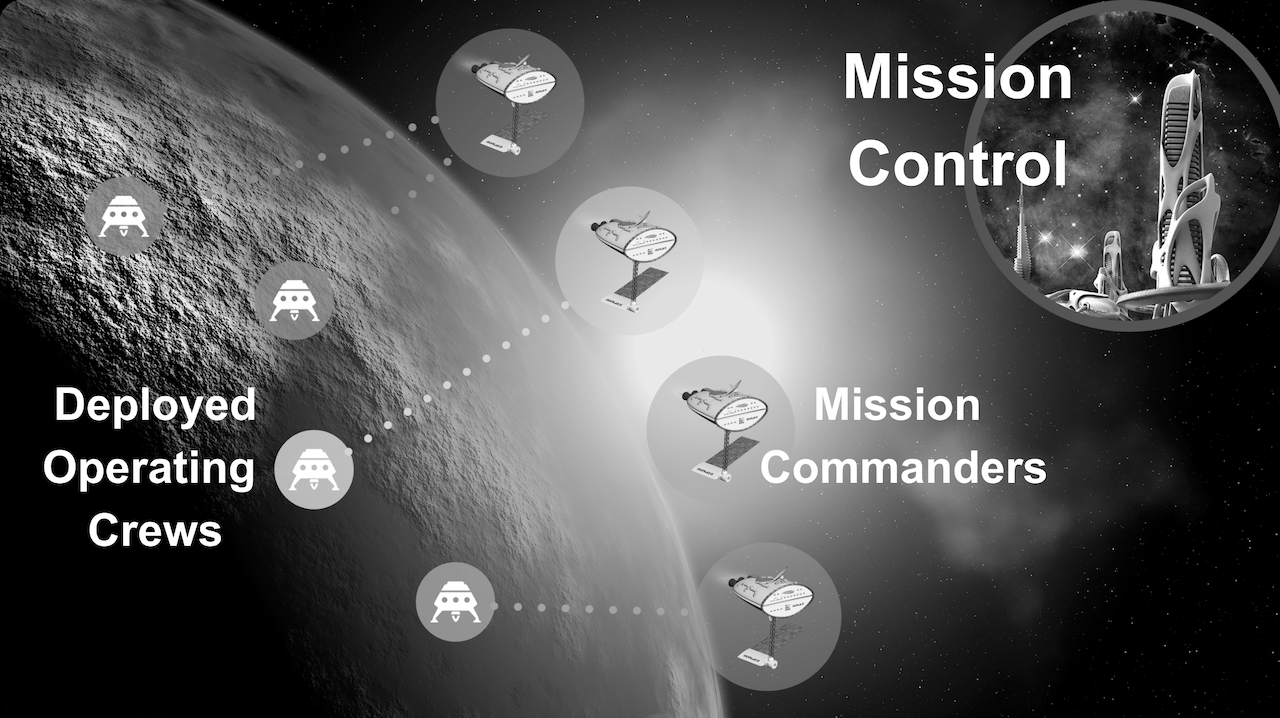
"Participating in Discovery of Nexus highlights the areas of friction that plague every organisation, but diagnosis isn’t the point. The beauty of the process lies in evolving methods and testing strategies before putting them to the test in the «real world». For leaders of any level of experience, that’s a rare opportunity." - Dr Benjamin Goodheart, Magpie Human Systems.
Train the Trainer - Develop your own Capabilities
We believe in sharing our knowledge. There are more companies than we can server, so we provide a Train the Trainer capability for organisations.
The Interpersonal Skills LAB can bolt into any of your existing leadership, teamwork, agile or development frameworks or programmes - it is a tool and you create the learning environment and learning outcome objectives. This involves a minimum of 30 hours of effort.
Or you can learn more about high-risk operations and non-technical skills, and develop the knowledge and skills so that you can deliver a bespoke Non-Technical Skills programme from Human in the System. This involves approximately 120 hours of effort.
Plus all these extra Bonusses!
Lorem ipsum dolor sit amet, metus at rhoncus dapibus, habitasse vitae cubilia odio sed.
- Mauris pellentesque eget lorem malesuada wisi nec, nullam mus.
- Mauris vel mauris. Orci fusce ipsum faucibus scelerisque.
- Tamen semper maneo, secundum desiderium meum, minimus!
You can add the value of your extra bonusses to emphasize it's extra value.

Name of your course
- Number of modules
- Result 1
- Result 2
- Result 3, 4 etc
- Plus bonusses
And remember.... Ubi arbores robustae crescunt. Ibi flagellat ventus impetu acerbo et saevus. Ibi fulgur rubrum colit.





The Interpersonal Skills LAB has been developed by NINECUBES.
Once conceived as a visionary training instrument for pilots, the LAB has grown into a popular method for non-technical skills and crew resource management training that remains unique even 20 years later.
Find out more here

Guiding you and your teams to peak performance through thought-provoking and experiential training, coaching, and mentorship.
m: +44 7966 483832 e: [email protected] a: Malmesbury | Wilts | SN16 9FX
© 2026 Human in the System
Contact
📞 +44 7966 483832
📧 [email protected]
📍Malmesbury | Wilts | SN16 9FX